


Multi Jet Fusion (MJF) is one of the most advanced and fastest 3D printing technologies used in modern manufacturing.
It is a powder-based additive manufacturing process used to produce strong and functional plastic parts. In this process, a thin layer of powder material is spread across the build platform, and special agents are applied using printheads. Heat is then used to fuse the powder in selected areas to form a solid layer. This process is repeated layer by layer until the final object is created. MJF technology is widely used in industries such as automotive, aerospace, healthcare, and consumer products because it provides high speed, good dimensional accuracy, and the ability to produce complex designs without support structures.
The working principle of Multi Jet Fusion is based on powder-bed fusion technology. In this process, a thin layer of powder material is first spread across the build platform. After that, special fusing and detailing agents are selectively deposited onto the powder using printheads. Heat energy is then applied, which causes the powder in the areas with the fusing agent to melt and fuse together, forming a solid layer. The build platform then moves down slightly, and a new layer of powder is spread over it. This process continues layer by layer until the complete three-dimensional object is formed.
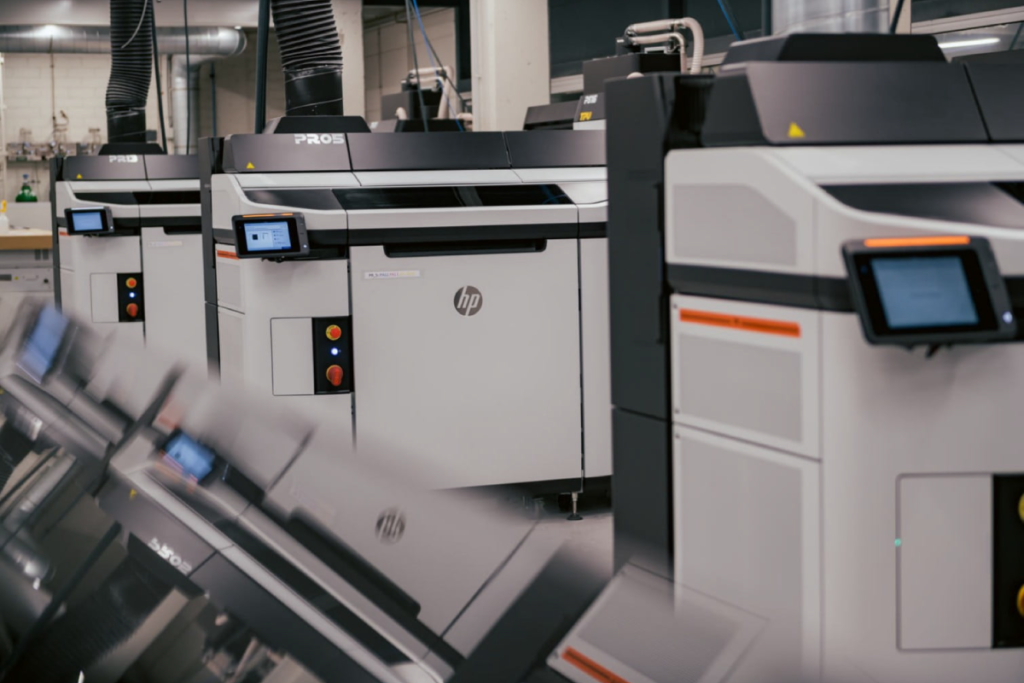
Machines Features
High-Speed Production
MJF machines are designed for fast printing and batch production, enabling multiple parts to be printed at the same time efficiently.
Material Used in MJF
The most common materials include:
Nylon Polymer
This material create parts that are:
Advantages of MJF
1. High Speed
MJF can print large batches faster than many other 3D printing methods.
2. High Accuracy
It produces fine details and smooth surfaces.
3. Strong Parts
MJF parts are nearly isotropic, meaning they are strong in all directions.
4. No Support Structures
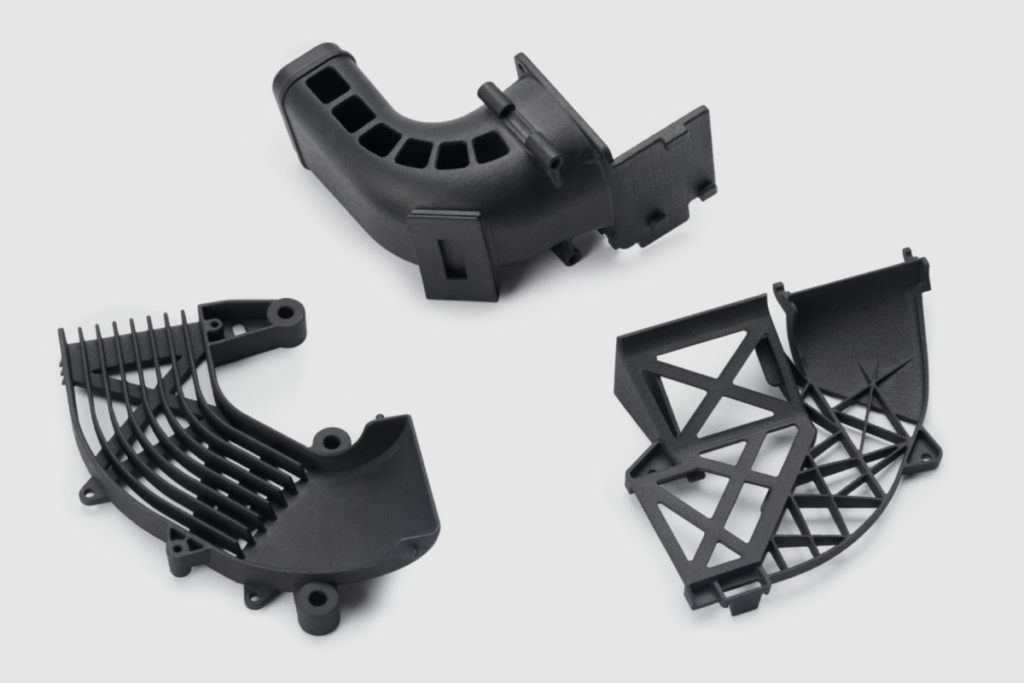
Parts are supported by surrounding powder.
5. Good for Production
Companies use it for mass production of plastic parts.
Applications of MJF
MJF is used in many industries.
Automotive
– Interior components
– Air ducts
– Clips and brackets
Aerospace
– Lightweight components
Medical
– Prosthetics
– Orthotics
Consumer Products
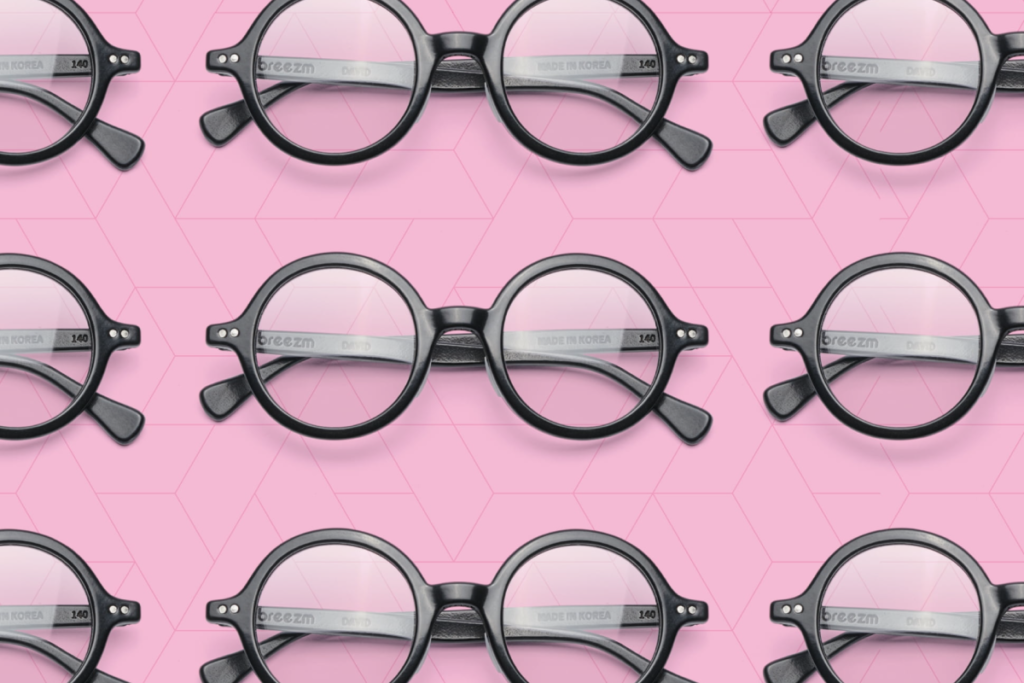
– Eyewear frames
– Shoe components
Robotics
– Custom housings
1. Build Volume
MJF printers can produce relatively large parts. For example, the HP Jet Fusion 4200 has a build volume of about 380 × 284 × 380 mm, allowing multiple parts to be printed in one build.
2. Layer Thickness
The typical layer thickness in MJF printing is around 80 microns (0.08 mm), which helps produce smooth surfaces and detailed parts.
3. Dimensional Accuracy
MJF parts generally have an accuracy of about ±0.3 mm or ±0.3% of the part size, making it suitable for functional engineering components.